


Share Latest Sep-2023 L4M7Test Practice Test Questions, Exam Dumps
Positive Aspects of Valid Dumps L4M7 Exam Dumps!
CIPS L4M7 (CIPS Whole Life Asset Management) Certification Exam is a globally recognized certification for professionals seeking to enhance their knowledge and expertise in the field of asset management. CIPS Whole Life Asset Management certification is offered by the Chartered Institute of Procurement and Supply (CIPS), which is the world's largest professional body representing the procurement and supply management profession.
NEW QUESTION # 14
Which one of the following statements is true about radio frequency identification (RFID)?
- A. An active RFID tag does not require a power source
- B. Normally passive RFID tags store ID numbers
- C. RFID tags require laser scanning.
- D. A passive RFID tag does not use an antenna
Answer: B
Explanation:
Radio frequency identification (RFID) are items which use radio technology to identify itself and its location subject to having appropriate hardware and software.
RFID tags are made of three different components: an RFID chip, which is an integrated circuit (IC), an antenna, and a substrate.
A RFID Reader is a device that uses radio-frequency waves to wirelessly transfer data between itself and a RFID tag/label in order to identify, categorize and track assets. When combined with the right RFID software, a RFID reader can identify objects quicker, more accurately, at a reduced overall cost, and at various points of the object's lifecycle.
Passive RFID systems use tags with no internal power source and instead are powered by the electromagnetic energy transmitted from an RFID reader. Passive RFID tags are used for applica-tions such as access control, file tracking, race timing, supply chain management, smart labels, and more.
Active RFID systems have three essential parts - a reader or interrogator, antenna, and a tag. Ac-tive RFID tags possess their own power source - an internal battery that enables them to have ex-tremely long read ranges as well as large memory banks.
Reference:
LO 1, AC 1.2
NEW QUESTION # 15
Which of the following statements about radio frequency identification (RFID) is NOT true?
- A. RFID tags contain a microchip in which data of an item are saved
- B. RFID systems can be complied with GS1 standards
- C. RFID is a powerful technology for tracking the movement of goods throughout the supply chain
- D. RFID systems transmit radio signals over extreme long distances.
Answer: D
Explanation:
RFID tags have very limited range. The following table was extracted from Wikipedia: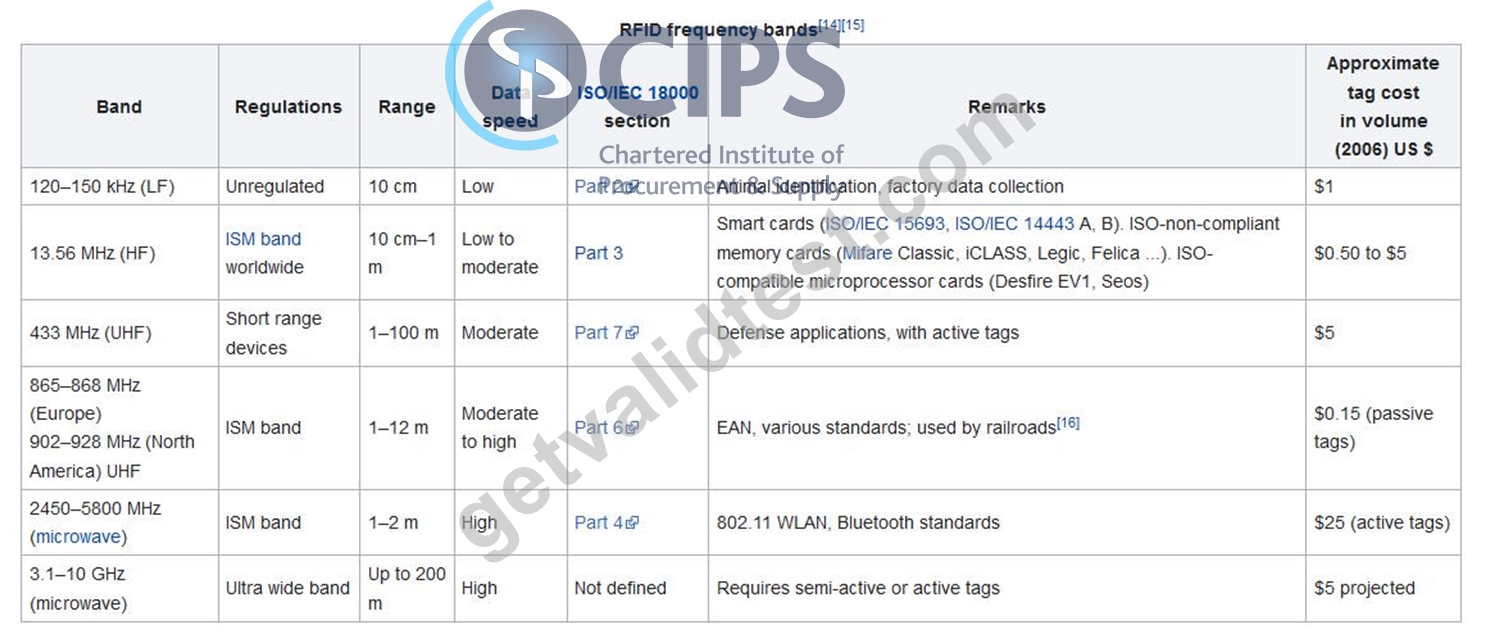
RFID tags can be used to do the following:
- Track individual items
- Track boxes of products, cages of products and pallet
- Track containers with multiple loads
- Locate equipment within a building
- Trigger alarms should equipment or stock be removed without authorisation.
RFID tags are made of three different components: an RFID chip, which is an integrated circuit (IC), an antenna, and a substrate. RFID chips are very small integrated circuit incorporating a small memory capability - many are smaller than 2mm square and 2mm thick. Despite its size, many can hold 2000 characters of data. Many retailers simply use the tag as a thick label and print both sides with product information and perhaps a barcode.
It is important to note that there are multiple standards in use for RFID - some of these are standardised for industries but there are also national standards in operations. These standards need to be investigated before investment as not all readers work with all cards. GS1 is a non-for-profit organisation which make the standards for barcodes and RFID.
Reference:
LO 1, AC 1.2
NEW QUESTION # 16
Which of the following best describes the term 'periodic review'?
- A. Items are reviewed when the price is at its lowest
- B. Items are reviewed and orders placed depending on requirements
- C. Items are reviewed as part of an imprest system
- D. Items are reviewed when the Kanban is triggered
Answer: C
Explanation:
Fixed-Time Period System (or Periodic Review system) is the inventory management system in which inventory is checked in fixed time periods, T, and the quantity ordered varies.
The imprest system is a form of financial accounting system. The most common imprest system is the petty cash system. The base characteristic of an imprest system is that a fixed amount is re-served, which after a certain period of time or when circumstances require, because money was spent, it will be replenished.
So the correct answer should be "Items are reviewed as part of an imprest system" LO 2, AC 2.3
NEW QUESTION # 17
Extra units that are held in inventory to reduce the risks of stock-out are called...?
- A. Demand variance
- B. Reorder point
- C. Just-in-time
- D. Safety stock
Answer: D
Explanation:
The safety stock (or buffer stock) is the stock level that limits stock shortages due to unforeseen events (forecasts not in line with demand, longer than expected supply time, etc...) Demand variance is the degree to which the demand in a fixed period deviates from the average demand of the same period.
A reorder point is the unit quantity on hand that triggers the purchase of a predetermined amount of replenishment inventory.
The just-in-time (JIT) inventory system is a management strategy that aligns raw-material orders from suppliers directly with production schedules.
Reference:
LO 2, AC 2.1
NEW QUESTION # 18
XYZ Ltd is a major distributor of electrical equipment protection products in the United States. XYZ found that there was a lack of communication between the company and its key supplier, leading to the supplier trying to predict distributor needs and distributor attempting to estimate lead times. Essentially, both the supplier and the distributor have different sets of information, spending time and money trying to predict what the other will do. To deal with this problem, XYZ Ltd decides to implement new inventory management method in which the supplier manage the replenishment of items for sale. Both parties are obliged to share information on variations in demand and stock levels for goods used for or sale. Which inventory management method is XYZ Ltd implementing?
- A. Economic order quantity
- B. Vendor managed inventory
- C. Reverse logistics
- D. Floor-ready merchandise
Answer: B
Explanation:
Floor-Ready Merchandise can be defined as the merchandise that is pre-tagged, pre ticketed and pre-occupied with all the necessary details and information such as marked to their specifications for style, size, type, color and price, this information is required in the retail store and is done before it reaches the retail store.
Economic order quantity (EOQ) is the ideal order quantity a company should purchase to minimize inventory costs such as holding costs, shortage costs, and order costs. This production-scheduling model was developed in 1913 by Ford W.
Harris and has been refined over time. The formula assumes that demand, ordering, and holding costs all remain constant.
The full definition of reverse logistics, as according to The Council of Logistics Management, is the process of implementing, controlling, and planning the cost-effective flow of finished goods, raw materials, and in-process inventory. The flow is from the point of consumption (i.e. the customer) to the point of origin (i.e. the manufacturer), to properly dispose of these or to recapture value.
In the scenario, XYZ solves the current situation by letting the supplier to management the inventory and sharing stock level information with the supplier. Vendor managed inventory is the most suitable answer.
Reference:
LO 3, AC 3.1
NEW QUESTION # 19
The amount of inventory available at the start of an accounting period is known as...?
- A. Work-in-progress
- B. Opening stock
- C. Buffer stock
- D. Closing stock
Answer: B
Explanation:
Opening stock is the starting amount of inventory that a business has at a fixed moment in time. This could be the start of a financial year, another reporting period or ad hoc stocktake. The concept of opening stock mush not be confused with raw materials Closing stock is the inventory held at the end of the period under consideration. Thus, the closing stock of one period is automatically the opening stock for the next.
Work in progress is the stock part-way through a manufacturing process; in the service sectors the term is also used for anything between order and delivery.
Buffer stock (safety stock) is the stock held as a contingency or insurance against disruption or unexpected demand.
LO 2, AC 2.1
NEW QUESTION # 20
Which of the following best describes category 'A' in ABC analysis in inventory management?
- A. Items with low uncertainty
- B. Items that represent approximately 15% of total value
- C. Items with high uncertainty
- D. Items with high values
Answer: D
Explanation:
ABC classifications are applied to stock and its management is based loosely on the Pareto princi-ple, better known as the 80/20 rule.
The likely outcome of analysis of inventory (value importance):
- Category A - about 20% of the stock items account for about 80% of the total inventory value. Items in category A have the highest value.
- Category B - about 30% of items account for about 15% of total inventory value
- Category C - the remaining 50% of items account for 5% of the total inventory value Reference:
LO 2, AC 2.1
NEW QUESTION # 21
Which of the following is the Japanese word for 'billboard' or 'signboard'?
- A. Kaizen
- B. Muda
- C. Kanban
- D. Poka-Yoke
Answer: C
Explanation:
Kanban (看板) (signboard or billboard in Japanese) is a scheduling system for lean manufacturing and just-in-time manufacturing (JIT).
Poka-yoke (ポカヨケ, [poka yoke]) is a Japanese term that means "mistake-proofing" or "inadvertent error prevention". A poka-yoke is any mechanism in any process that helps an equipment operator avoid (yokeru) mistakes (poka). Its purpose is to eliminate product defects by preventing, correcting, or drawing attention to human errors as they occur.
Kaizen is a concept referring to business activities that continuously improve all functions and involve all employees from the CEO to the assembly line workers. Kaizen (改善) is the Sino-Japanese word for "improvement". Kaizen also applies to processes, such as purchasing and logis-tics, that cross organizational boundaries into the supply chain.
Muda (無駄, on'yomi reading) is a Japanese word meaning "futility; uselessness; wastefulness", and is a key concept in lean process thinking, like the Toyota Production System (TPS) as one of the three types of deviation from optimal allocation of resources (the others being mura and muri). Waste reduction is an effective way to increase profitability.
Reference:
LO 2, AC 2.3
NEW QUESTION # 22
Which of the following refer to material used for filling the void left in the box but they have poor environmental profile?
- A. Polypropylene straps
- B. Polystyrene chips
- C. Cages
- D. Metal racking
Answer: B
Explanation:
Void filling is the general term giving to the challenge of filling the space left in a box after the products have been packed. This means that if there is no void filling material, the product inside can move around and could be damaged. Materials to fill voids to secure contents
* Polystyrene (PS) is a synthetic aromatic hydrocarbon polymer made from the monomer known as styrene.[5] Polystyrene can be solid or foamed. General-purpose polystyrene is clear, hard, and rather brittle. It is an inexpensive resin per unit weight. It is a rather poor barrier to oxygen and water vapour and has a relatively low melting point.[6] Polystyrene is one of the most widely used plastics, the scale of its production being several million tonnes per year.[7] Polystyrene can be naturally transparent, but can be coloured with colourants. Uses include protective packaging (such as packing peanuts and CD and DVD cases), containers, lids, bottles, trays, tum-blers, disposable cutlery[6] and in the making of models. Polystyrene is generally considered to be non-biodegradable. However, certain organisms are able to degrade it, albeit very slowly.
* Chips made of bio-degradable materials
* Absorbent and fire-resistant material
* Shredded paper, cardboard or wood-Based material
* Paper or cardboard rolls
* Bubble wrap
* Air-filled cushions
* Self expanding foam
Straps are used to group items into unit load. Polypropylene or polyester are the materials most often used. The wider the strap, the stronger it will be. Using more than one strap and straps for length and width will create a strong place for stock.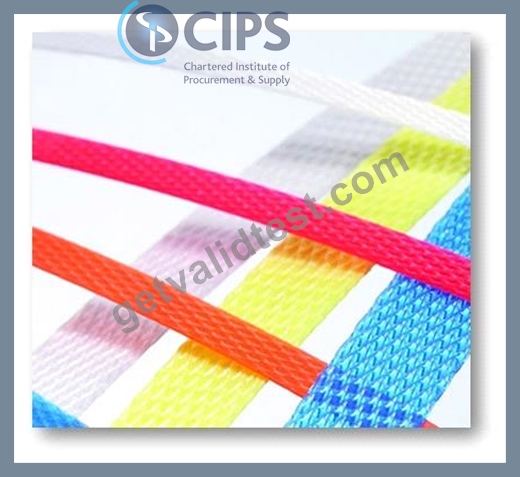
Reference:
- Polystyrene (Wikipedia)
- CIPS study guide page 65
LO 1, AC 1.3
NEW QUESTION # 23
Which of the following allow the operators to access higher levels in warehouse facility? Select TWO that apply:
- A. Order picker
- B. Scissor platform
- C. Carousel
- D. Stacker crane
- E. Grab
Answer: A,B
Explanation:
It is important to ensure safe working in storage facilities, and access to higher shelves or racking presents a challenge. Lifting at full reach becomes a problem at relative low weight. There can also be danger for other workers who are around someone working at height, from the movement of equipment or dropping stock from a height.
Scissor platforms are used in high-roof warehouses to gain access to lighting, high-racking units and sections of wall and roof.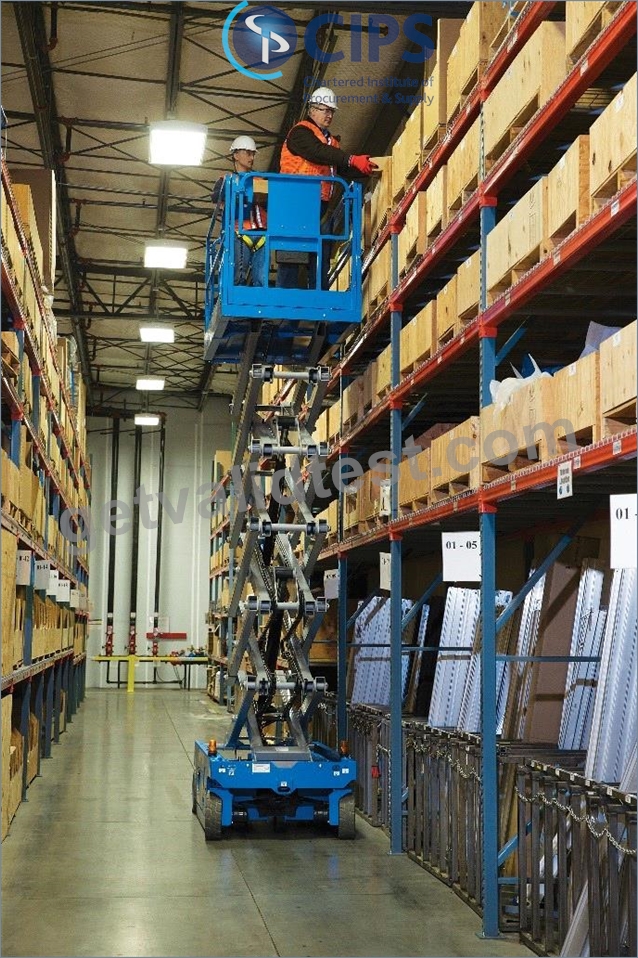
ORDER PICKER is manual or powered device - some with ride-on capability and some without. This allow for low-level, medium-level and high-level picking of various items. Many are equipped with forks to allow transfer capability of larger picked boxes. Higher-level and narrow or very narrow -aisle versions have the ability to elevate operators on the front platform to higher racking to pick items.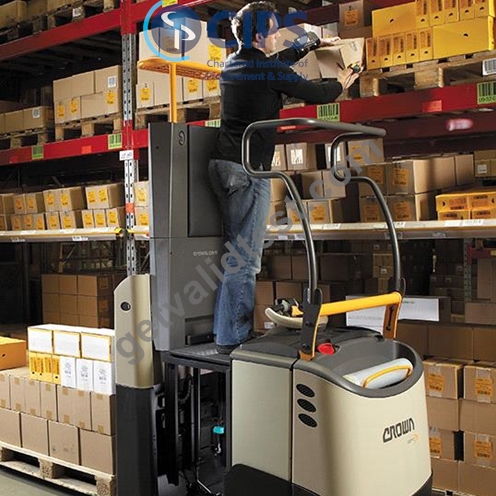
Grabs are designed to hold stock either width-wise or from above. These are either specific devices designed for grabbing materials or are available as an accessory to forklift trucks.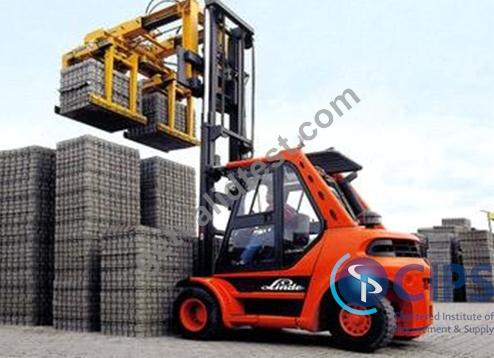
Carousels are space-efficient, rotating devices which allow access to a large range of product from a single location. Designs are variable, with carousels rotating horizontally or vertically until the required items can be retrieved.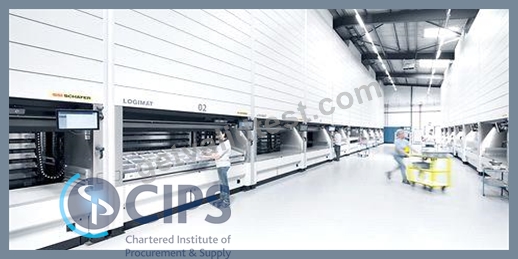
Stacker-cranes are designed for the automated storage and retrieval of unit loads, in high-bay warehouses. They travel in aisles equipped with guide rails, electrical supply, data transmission and control systems. To ensure the storage and retrieval functions, the stacker-crane carries out three types of movement : long-travel, lifting and picking.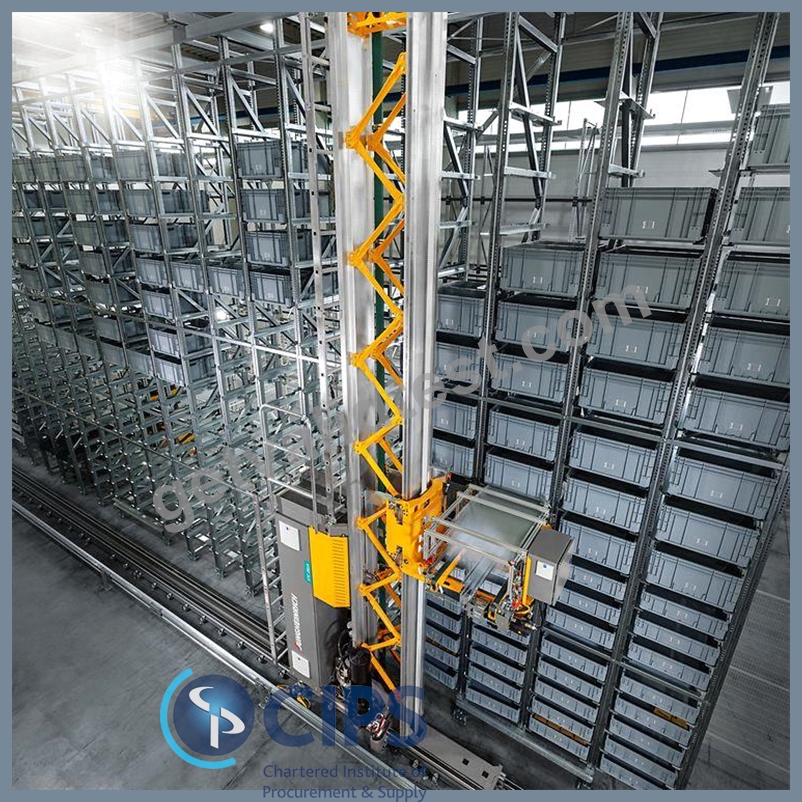
Reference:
LO 1, AC 1.3
NEW QUESTION # 24
MRP software is applied to schedule which of the following?
- A. Human resource management
- B. Executive meetings
- C. Production processes
- D. Tax accounting
Answer: C
Explanation:
Material Requirements Planning (MRP) software manages material requirements for manufacturing processes.
LO 2, AC 2.3
NEW QUESTION # 25
XYZ Ltd is looking for new office space overseas. To keep the overhead expense minimal, it chooses leasing rather than purchasing new office. In leasing contract, which of the following costs are most likely to be attributable to the lessee?
1. Disposal costs
2. Rentals
3. Operating costs
4. Vendor selection costs
- A. 1, 2 and 4
- B. 1, 3 and 4
- C. 2, 3 and 4
- D. 1, 2 and 3
Answer: C
Explanation:
A lease is a contractual arrangement calling for the lessee (user) to pay the lessor (owner) for use of an asset. Property, buildings and vehicles are common assets that are leased. Industrial or business equipment is also leased. Since the lessee does not own the asset, it is not responsible for disposing the assets, and therefore, disposal costs are not attributable to the lessee. The lessee usually incurs rentals and operating costs. Finally, a company should treat the lease the same as other contracts, which they must qualify the supplier.
Reference:
LO 3, AC 3.1
NEW QUESTION # 26
Which of the following correctly describes the triple bottom line?
- A. People, Planet, Profit
- B. Professional, Planet, Profit
- C. People, Planet, Project
- D. People, Product, Profit
Answer: A
Explanation:
The triple bottom line is a sustainability framework that examines a company's social, environment, and economic impact (or People, Planet, Profit).
Reference:
- 25 Years Ago I Coined the Phrase "Triple Bottom Line." Here's Why It's Time to Rethink It.
- CIPS study guide page 202
LO 3, AC 3.3
NEW QUESTION # 27
A brewery sells its beer in aluminum cans. It recycles the cans by using contractors to collect and mold the used cans. This is an example of...?
- A. Reuse
- B. Open-loop recycling
- C. Closed-loop recycling
- D. Carbon recycling
Answer: C
Explanation:
There are two main processes of recycling - open loop recycling and closed loop recycling.
Open Loop Recycling
Open loop recycling is a method that delays disposal by converting manufactured goods and spent materials into both new raw materials, which can be used for a manufacturing purpose, as a fuel source for a different manufacturing process and waste products.
Typically, materials recycled through open-loop recycling will be used for purposes different from their original purpose.
This means that the input into the recycling process is converted to a new raw material, which can be used as an input into another manufacturing process.
Materials in an open loop recycling process are treated using various forms of treatment including heat, chemical reactions, or physical crushing.
Closed Loop Recycling
Closed loop recycling is a process where waste is collected, recycled and then used again to make the same product it came from. This process is restorative and regenerative by design and aims to keep materials at their highest utility and value always.
Closed loop recycling is focused on resource sustainability, which means that recycling of a material can be done indefinitely without degradation of properties. In this case, conversion of the used product back to raw material allows repeated making of the same product, which helps hazardous waste generators reduce carbon footprint and achieve corporate sustainability initiatives.
Closed-loop recycling is common in specialized industries, such as the computer and battery industries, which use expensive or complex goods that cannot easily be broken down post-consumption into constituent materials.
A prime example of a closed-loop recycling process is the recycling of aluminum cans. Aluminum can be recycled to form new cans with little material degradation or waste creation.
Reference:
- Open Loop Vs Closed Loop Recycling
- CIPS study guide page 203
LO 3, AC 3.3
NEW QUESTION # 28
Ranger Mobile Ltd is a emerging smartphone manufacturer. The manufacturer adopts the just-in-time method: First, the customers make orders, then it will decide which components to be pur-chased according to the bill of materials. These components are known as which of the following?
- A. Capital goods
- B. Indirect items
- C. Independent forecast items
- D. Dependent demand items
Answer: D
Explanation:
Dependent demand is the requirement for stock item which is directly related to and therefore de-pendent upon the rate of production (examples are: raw materials, components, energy). The com-ponents in the scenario are dependent demand items.
Independent demand is the requirement for stock item which is not directly related to, and is therefore independent of rate of production.
Reference:
LO 2, AC 2.1
NEW QUESTION # 29
A supermarket calculates that the average holding cost for an item is $1.50 per cubic meter per day. A beer pallet which has volume of 0.5 cubic meter will be stored for 5 days. What is the holding cost of this beer pallet?
- A. $4.00
- B. $3.75
- C. $4.25
- D. $4.50
Answer: B
Explanation:
The holding cost per day of the beer pallet is equal to 1.50/2=0.75
The beer pallet is stored for 5 days, the total holding cost is: 0.75*5=3.75.
LO 2, AC 2.2
NEW QUESTION # 30
Do all types of warehouses require access to daylight to reduce the cost of electricity?
- A. Yes, because sunlight sterilises inventories in damp conditions
- B. Yes, because organisation's need for artificial lighting and heating will reduce
- C. No, because some types of stock are sensitive to sunlight
- D. No, because only ventilation can help to reduce the humidity in the warehouse
Answer: C
Explanation:
The design of a building should consider the advantages of natural light as this can reduce the cost of artificial lighting and improve the environmental performance of the building. Daylight entering the building can also help reduce heating costs. Unfortunately some stocks react badly to direct sunlight, and some stock reacts badly to extreme of temperature or may require a specific temperature for storage. Some stock may require a warmer temperature than the ambient temperature and other stocks may require cooler temperature. For example, fabric and garment are sensitive to direct sunlight as ultraviolet light catalyses a reaction between the water present in all fabrics and atmospheric oxygen to create hydrogen peroxide. This is a bleaching agent and breaks down the chemical bonds that give dyes their colour.
Reference:
LO 1, AC 1.1
NEW QUESTION # 31
To improve the security of a warehouse, alarm systems are commonly used. Which of the following is an important part of these systems?
- A. Lighting
- B. CCTV
- C. Fencing
- D. Sensors
Answer: D
Explanation:
The most basic alarm consists of one or more sensors to detect intruders, and an alerting device to indicate the intrusion. However, a typical premises security alarm employs the following compo-nents:
- Premises control unit (PCU), Alarm Control Panel (ACP), or simply panel: The "brain" of the system, it reads sensor inputs, tracks arm/disarm status, and signals intrusions. In modern system, this is typically one or more computer circuit boards inside a metal enclosure, along with a power supply.
- Sensors: Devices which detect intrusions. Sensors may be placed at the perimeter of the protected area, within it, or both. Sensors can detect intruders by a variety of methods, such as monitoring doors and windows for opening, or by monitoring unoccupied interiors for motions, sound, vibration, or other disturbances.
- Alerting devices: These indicate an alarm condition. Most commonly, these are bells, sirens, and/or flashing lights. Alerting devices serve the dual purposes of warning occupants of intrusion, and potentially scaring off burglars. These devices may also be used to warn occupants of a fire or smoke condition.
- Keypads: Small devices, typically wall-mounted, which function as the human-machine interface to the system. In addition to buttons, keypads typically feature indicator lights, a small multi-character display, or both.etc.
- Interconnections between components. This may consist of direct wiring to the control unit, or wireless links with local power supplies.
In addition to the system itself, security alarms are often coupled with a monitoring service. In the event of an alarm, the premises control unit contacts a central monitoring station. Operators at the station see the signal and take appropriate action, such as contacting property owners, notifying police, or dispatching private security forces. Such signals may be transmitted via dedicated alarm circuits, telephone lines, or the internet.
Reference:
Security alarm - Wikipedia
LO 1, AC 1.1
NEW QUESTION # 32
To make loading/unloading more effective and efficient, which feature should be included in vehi-cle dock design?
- A. 'Dual-use' docks are always the most efficient
- B. Vehicle docks only require a small area to ensure faster goods flow
- C. The dock platform is almost at the same level as the height of the trailer's rear platform
- D. Steeper slope will reduce the chance of errors and accidents
Answer: C
Explanation:
Warehouse dock is a feature of warehouse design - used for unloading and loading vehicles. It is crucial to carefully design where they are externally located in a facility and choose the best type of dock depending on the available space.
In many cases efficient and effective loading and unloading is achieved by a dock design that places the loading and unloading vehicle' rear platform at the same height as the warehouse floor.
Slopes in docking areas must always be as small as possible: the gentler the slope, the less chance of errors and accidents. If a warehouse is going to be used by large volume vehicles, such as high cubes, it may be necessary to install special devices, such as hydraulically adjustable docks or ground level lift platforms.
Current trends indicate that vehicles that are longer and wider and have a greater volume will be increasingly common. Therefore, when planning the location of the docks, it would be useful to ensure that there is a large area for the approach, manoeuvring and build-up of large vehicles.
One option to increase the efficiency of the docks is to combine reception and dispatch into a single area (dual use). This solution drastically reduces costs and, above all, increases the use of handling equipment and personnel. However, if this is justified by the volume of material flows, there can also be separate access points for each function (some for reception and others for dispatch - 'sole use').
Reference:
- Warehouse docking areas - Interlake
- CIPS study guide page 13
LO 1, AC 1.1
NEW QUESTION # 33
A manager who is concerned about the environmental impact of packaging should do which of the following?
- A. Adopt international environmental packaging standards
- B. Try to reduce the costs of packaging
- C. Purchase the packaging materials in bulk
- D. Not use the packaging materials at all
Answer: A
Explanation:
In principle, use of any materials involves an environmental cost. Some packaging materials use a lot of natural resources and energy to produce. The journey taken by packaging from raw material to manufacturing and then to the initial user also incurs a 'carbon footprint'. The weight of packag-ing contributes to the fuel usage of vehicles while the volume used can add up to additional jour-neys or the use of larger vehicles. Finally, the reuse, return, disposal or recycling will also involve additional to the environmental cost.
In this question:
- 'Purchase
the packaging materials in bulk' may incur additional fuel and carbon footprint in delivering these materials
- 'Try to reduce the costs of packaging' may prompt the organisation to use less eco-friendly and cheap materials like polystyrene chips
- 'Not use the packaging materials at all' can increase the environmental performance of packag-ing activities, but it also harms the products to be delivered and may cause other environmental problems (i.e. spillage of toxic chemicals into the environment) So the correct answer should be: 'Adopt international environmental packaging standards'. The International Standards Organisation (ISO) has published several standards regarding packaging and environment, namely ISO 18601, ISO 18602, ISO 18603, ISO 18604, ISO 18605, ISO 18606.
Reference:
LO 1, AC 1.3
NEW QUESTION # 34
Objective forecasting techniques must be based on which of the following?
1. Opinions
2. Figures
3. Facts
4. Jugdement
- A. 1 and 4 only
- B. 1 and 2 only
- C. 3 and 4 only
- D. 2 and 3 only
Answer: D
Explanation:
Subjective forecasting uses qualitative methods (surveys, opinions) which relay on perception and opinion. Objective forecasting uses quantitative methods (facts and figures). Both methods have to make assumption about how closely (or not) the future will resemble the present and the past. Forecasting is never exact.
Reference:
LO 2, AC 2.3
NEW QUESTION # 35
Which of the following statements is true of just-in-time (JIT) purchasing?
- A. Only disadvantage of JIT purchasing is the higher level carrying and inspection costs
- B. In JIT purchasing, the optimal safety-stock level is the quantity of safety stock that minimizes the sum of annual relevant stockout and carrying costs
- C. JIT purchasing is guided solely by the EOQ model because that model emphasizes the tradeoff between relevant carrying and ordering costs
- D. In JIT purchasing, raw materials (or goods) are purchased so that products are delivered just as needed for production or sales
Answer: D
Explanation:
Just-in-time (JIT) purchasing is a systems approach for developing and operating the purchasing function. JIT purchasing along with the total quality management in many industries has been suc-cessful in reducing inventory and increasing the overall effectiveness of purchasing function and hence the productivity of manufacturing.
The just-in-time objectives of eliminating waste can be summarised in the 'five zeros: zero defects, zero set-up times, zero inventories, zero handling and zero lead times.
The correct answer should be 'In JIT purchasing, raw materials (or goods) are purchased so that products are delivered just as needed for production or sales' because it expresses that upstream activity (purchasing) only occurs as the downstream activity (production or sales) triggers.
Reference:
LO 2, AC 2.3
NEW QUESTION # 36
XYZ Inc opens a tender to purchase new forklift trucks for their new established warehouse. In the final round, there are two suppliers remain who offer two different bids. Supplier A's bid has high initial investment. After calculating the net present value, the NPV in year five is positive. On the other hand, supplier B's bid has low purchase price, with the NPV in year five is negative. If the NPV is the sole selection criterion, XYZ Inc should select the bid which has...?
- A. Zero NPV
- B. The lowest NPV
- C. Negative NPV
- D. Positive NPV
Answer: D
Explanation:
Net present value (NPV) is the 'today' net value that deprives from 'future' cash flow of an invest-ment or a capital purchase. Net Present Value is a helpful tool for assessing the total lifetime value of an investment. Procurement professionals or investors can base on this value to make decision to achieve value for money. Generally, an organisation should select the offer which has the highest NPV among their options. Preferably, the NPV of an capital investment should be positive, which means the investment eventually adds value to the business.
Reference:
LO 3, AC 3.2
NEW QUESTION # 37
A retailer wants to improve its service level in inventory management from 95% to 97%. Which of the following is the best course of action?
- A. Expanding replenishment lead time
- B. Decreasing safety stock
- C. Increasing safety stock
- D. Holding more cycle stock
Answer: B
Explanation:
For single items, an extra investment in inventory (higher levels of safety stock) will always in-crease customer service levels. Conversely, higher service levels imply larger quantities of safety stocks and an increased investment in inventory. (Procurement and Supply Chain Management - 9th Edition) Reference:
LO 2, AC 2.2
NEW QUESTION # 38
Which of the following is the material handling equipment which uses the suction force to lift an item?
- A. Pallet stacker
- B. Dolly
- C. Vacuum lifter
- D. Sack truck
Answer: C
Explanation:
VACUUM LIFTER uses the vacuum pad which attaches itself to a product. The suction force al-lows the product to be lifted (and rotated and placed). Vacuum lifters are used for moving and positioning glass sheets, but are also seen lifting boxes, plastic sacks, sheets of building materials and pipework. Some models feature hydraulic arms which allow easy movement of the lifted load. The lifting system will have a number of sucker pads and vacuum capability which determines the maximum weights and largest items that can be lifted.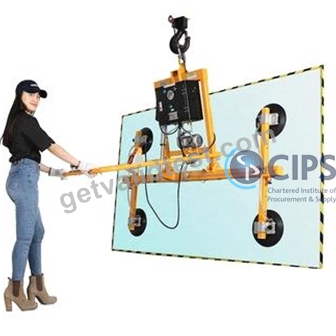
DOLLY consists of stack and sets of wheels (either casters or rollers) under the stack that allow the dolly and the heavy object on top of it to move easily and smoothly. For moving in a straight line, rollers is ideal. If you want to move manoeuvrability, dolly with sets of casters will let you swivel and turn.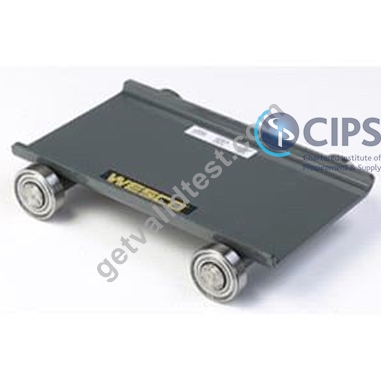
SACK TRUCK (hand truck) is an L-shaped box-moving handcart. It comprises a small base plat-form with two wheels at the base and a larger vertical structure. A small ledge to set objects on flat against the floor when the sack truck is upright. When moving, the truck and object are then tilted backward based on the vertical structure until the weight is balanced over the large wheels, making otherwise bulky and heavy objects easier to move.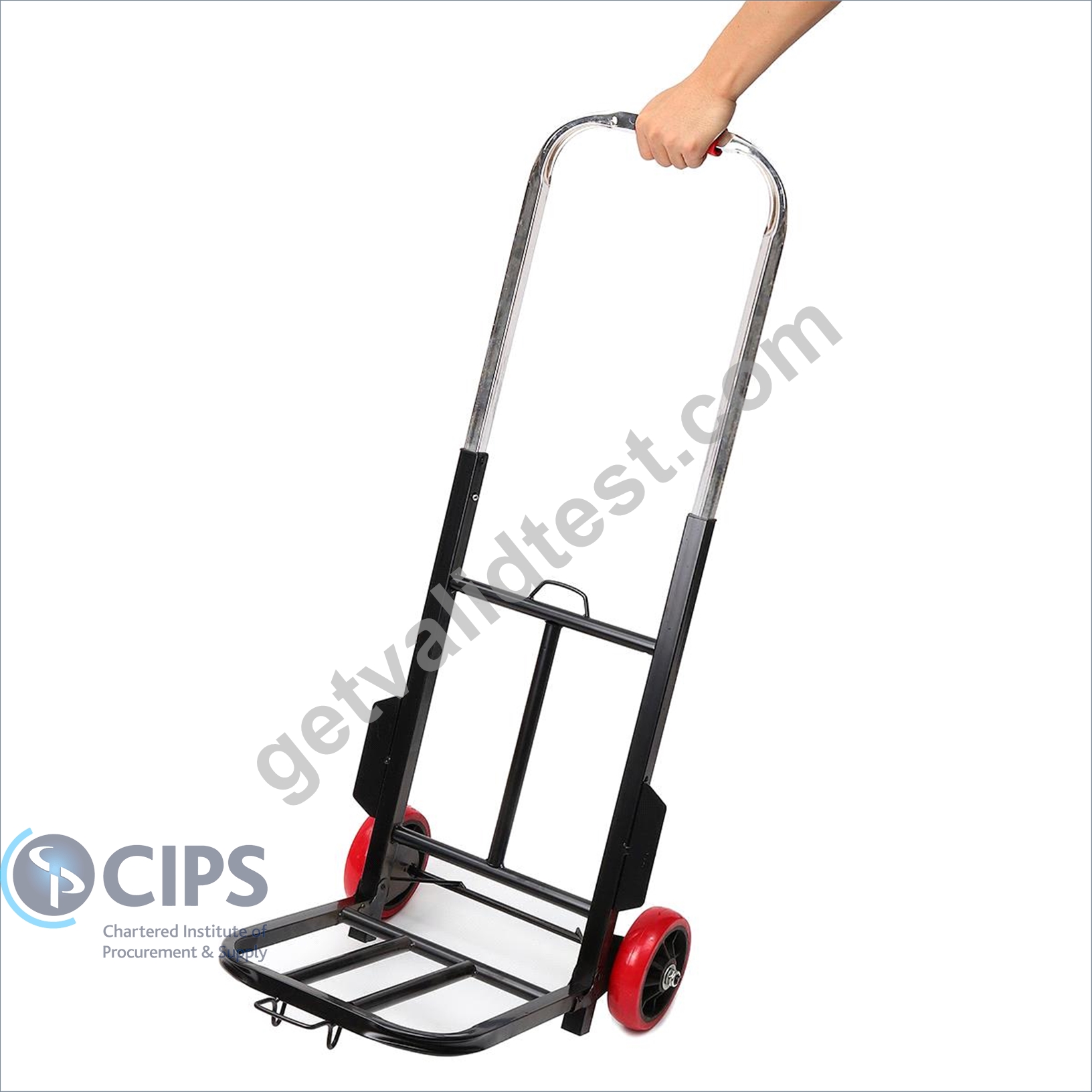
PALLET STACKER is designed to lift and stack pallets. This one is fully mobile so can move easily around the warehouse. An operator would typically sit or stand while driving like a counter-balanced, reach or straddle lift truck.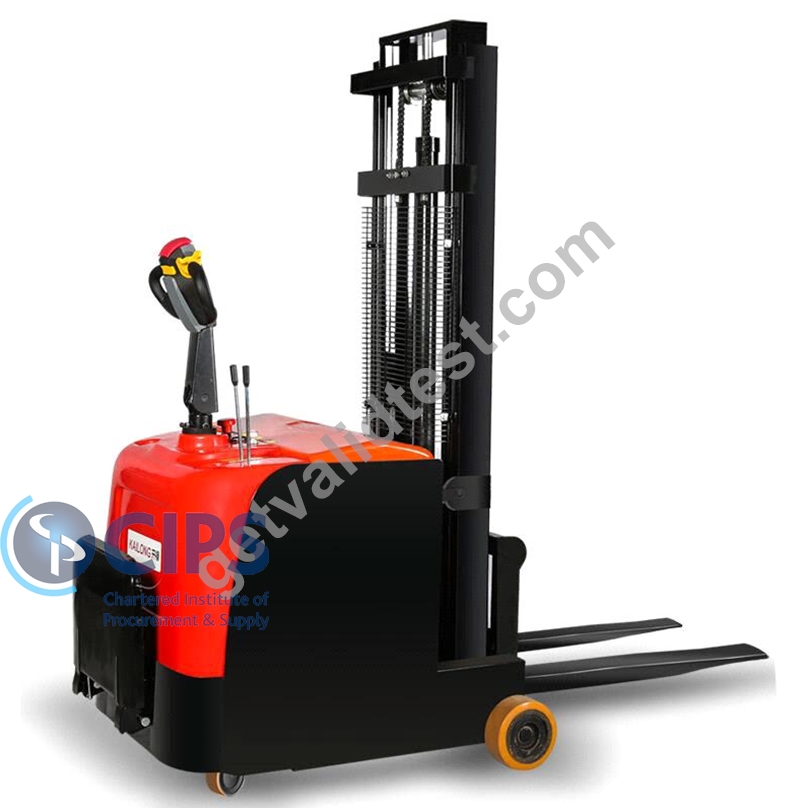
LO 1, AC 1.3
NEW QUESTION # 39
......
CIPS L4M7 exam is a highly specialized qualification that focuses on Whole Life Asset Management. L4M7 exam is designed for professionals who are looking to enhance their skills in the field of asset management and develop a deep understanding of the entire lifecycle of an asset.
CIPS L4M7 exam is divided into two parts. The first part is a multiple-choice exam that tests the candidate's knowledge of asset management principles and practices. The second part is a written exam that assesses the candidate's ability to apply these principles and practices to real-life scenarios. Both parts of the exam are challenging and require candidates to have a deep understanding of the subject matter.
Practice LATEST L4M7 Exam Updated 135 Questions: https://braindumps.getvalidtest.com/L4M7-brain-dumps.html